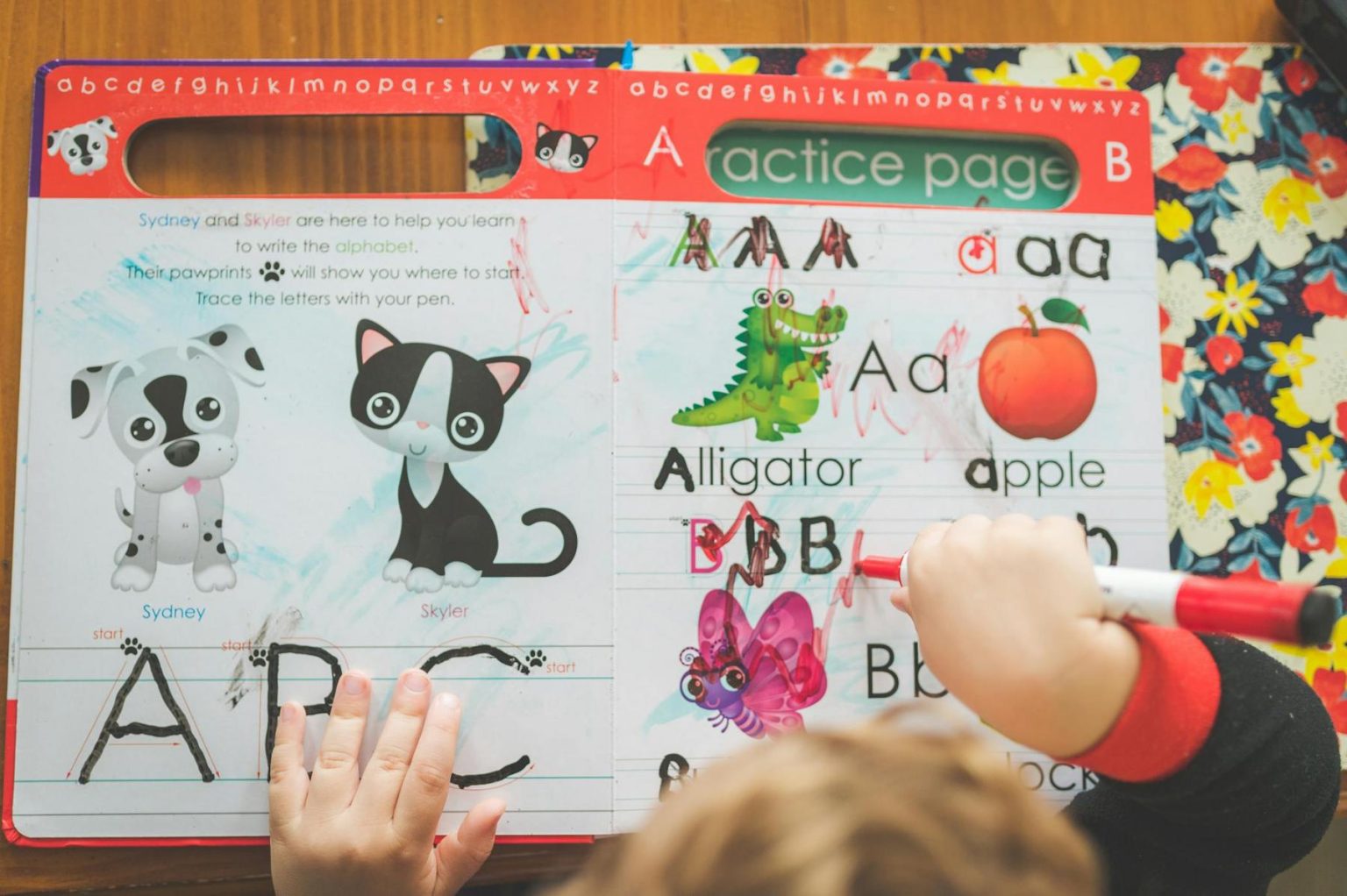
Supporting Literacy at Home: Evidence-Based Games and Activities for Southeast Queensland Families
The morning routine feels familiar yet increasingly unsettling. Your child reaches for their favourite book, but the sparkle that once lit their eyes when turning pages has dimmed. Perhaps they’re avoiding reading time, making excuses, or comparing themselves unfavourably to siblings or classmates. You’re not alone in noticing these signs. Across Southeast Queensland—from Cleveland to Capalaba, Wellington Point to Victoria Point, and throughout the Redlands, Logan, and Bayside areas—families are seeking practical, evidence-based ways to support their children’s literacy development at home.
Why Does Home Literacy Support Matter for Your Child’s Success?
The evidence is unequivocal: what happens at home profoundly shapes literacy outcomes. Parental involvement in reading has been identified as the most important determinant of language and emergent literacy development, surpassing other family background variables in its predictive power.
When examining Australian literacy outcomes through NAPLAN data, approximately one-third of students fall short of proficiency benchmarks—roughly 450,000 students nationally. However, children whose parents actively engage in literacy activities gain significant advantages. Research demonstrates that children introduced to books at an early age gain a substantial head start in school, and reading enjoyment proves more important for educational success than family socioeconomic status.
The distinction between passive and active home literacy environments illuminates why some families see stronger results. A passive environment includes parents’ own skills and attitudes toward reading, whilst an active environment encompasses literacy activities carried out together—shared reading, discussing letters, attempting to read and write, and playing with sounds and words. Critically, only active involvement correlates with higher reading frequency and deeper literacy skill development.
The Impact of Consistent Practice
Families often underestimate the power of brief, daily engagement. Studies on home reading programmes demonstrate that 15 minutes of structured practice at home significantly enhances intervention outcomes. Parents who received training to deliver carefully sequenced reading programmes to kindergarten children achieved remarkable results, with average scores surpassing 87% of control groups—even without formal classroom instruction.
The timing of this involvement matters profoundly. Early parental engagement, particularly before school entry and during the first years of formal education, produces the most lasting effects. Of all school subjects, reading has been found most sensitive to parental influences, with effects strongest in early years but continuing importance throughout teenage and adult years.
What Are the Building Blocks of Literacy Development?
Understanding the foundational components of literacy empowers families to target their support effectively. Literacy development rests on several interconnected pillars, each requiring attention and practice.
phonological awareness represents the ability to hear, identify, and manipulate sounds in spoken language. This umbrella term encompasses rhyming recognition, syllable awareness, and the most sophisticated form: phonemic awareness—recognising individual sounds (phonemes) within words. For example, the word “cat” contains three phonemes: /c/, /a/, /t/.
Strong phonemic awareness stands as one of the strongest predictors of later reading success. Children with robust phonological awareness skills demonstrate significantly greater reading readiness. This skill develops progressively, with preschoolers managing rhyming and syllable counting, kindergarteners identifying individual sounds in simple words, and more advanced learners mastering segmentation, blending, deletion, and substitution.
Structured literacy approaches emphasise systematic, explicit instruction across multiple areas: phoneme awareness, sound-symbol correspondences, phonics, orthography (spelling patterns), morphology (word parts like prefixes and suffixes), syntax (sentence structure), and semantics (meaning). This methodology proves particularly effective for children experiencing reading difficulties, with systematic phonics instruction producing significant benefits for students from kindergarten through Grade 6.
The principles underlying effective literacy instruction include explicit teaching rather than discovery learning, systematic progression from easier to more difficult concepts, cumulative building where each skill reinforces previous learning, multimodal engagement through multiple sensory pathways, and diagnostic responsiveness that adjusts to each child’s progress.
Which Evidence-Based Games Support Phonological Awareness?
Supporting literacy at home becomes engaging and effective when wrapped in play. Phonological awareness games develop the foundational skills that precede formal reading instruction, and families throughout Cleveland, Ormiston, Alexandra Hills, and surrounding suburbs can implement these activities using everyday household items.
Rhyme-Based Activities
Rhyming games develop auditory discrimination and phonological sensitivity. Try “Rhyme Time” where you state a word like “cat” and your child generates rhymes: “bat,” “hat,” “mat.” During car trips between Thornlands and Capalaba or whilst waiting at Redland Bay, play “Road Trip Rhymes”—spotting objects and finding rhymes. Reading nursery rhymes together and allowing your child to predict rhyming words strengthens pattern recognition.
Research confirms that children who develop rhyme awareness build stronger phonological foundations and prepare more effectively for decoding instruction. Create rhyme collages by cutting pictures from magazines and pasting rhyming pairs, or organise rhyme hunts throughout your home in Birkdale or Thorneside.
Syllable Awareness Activities
Syllable awareness helps children understand word structure. “Syllable Shopping” transforms grocery trips in Capalaba or Victoria Point into learning opportunities—clap syllables in food names: ba-na-na equals three claps. Provide your child with a drum or instrument and tap once per syllable as you say words. Use family members’ names to practise syllable counting, making the activity personally meaningful.
Musical syllables, jumping for each syllable, and rolling dice to determine how many syllables to include in words create varied, engaging practice. These activities serve as precursors to phonemic awareness, building the scaffolding for more complex sound manipulation.
Beginning Sound Activities
Initial sound recognition bridges phonological awareness and letter-sound knowledge. Play “I Spy” with sounds: “I spy something that starts with the /s/ sound.” Organise sound scavenger hunts around your home in Manly West, Wynnum, or Tingalpa, searching for objects beginning with specific sounds.
Create beginning sound sorting activities with household objects, or play “Sound Snap”—showing cards whilst your child taps or claps when hearing the target sound. Research indicates that children developing sensitivity to beginning sounds demonstrate improved reading readiness, and teachers effectively identify at-risk children through observing these skills.
How Can Play-Based Activities Strengthen Reading Skills?
Play provides a developmentally appropriate, joyful context for literacy learning. When children engage with literacy-related resources through play, they naturally adopt literate behaviours. Guided play—combining child autonomy with adult scaffolding—proves particularly effective for learning literacy concepts, showing significant effects on vocabulary and early literacy skill development.
Blending and Segmentation Games
These activities teach sound manipulation—critical for reading and spelling. “Robot Talk” has you speaking like a robot: “/c/ /a/ /t/,” whilst your child guesses the word. Play “Simon Says Blend”—giving isolated sounds like “/s/ /i/ /t/” where your child blends them and performs the action (sit).
For segmentation, try “Head, Shoulders, Knees and Toes” sound games, touching body parts for each sound in a word. Use Elkonin boxes—moving tokens into boxes as you say each sound, providing visual representation. Smash play-doh balls for each sound or karate chop to physically represent breaking words into sounds.
Letter Recognition and Word Building
Magnetic refrigerator letters enable word spelling and letter matching. Create letter hopscotch in your driveway in Springwood or Rochedale, jumping whilst naming letters. Form letters with play-doh, paint, or sand at beaches on North Stradbroke Island, Coochiemudlo Island, or other bay islands.
Letter knowledge—both name and sound—ranks among the strongest predictors of early reading success. Research identifies three kindergarten measures consistently predicting Grade 1-2 reading outcomes: letter-sound knowledge, phonological awareness, and rapid letter naming.
Fluency and Expression Activities
Reading fluency develops through repeated, engaging practice. Try choral reading—reading together—or echo reading where you read a line and your child echoes with expression. Reader’s theatre, where family members take parts and read with expression, transforms reading into performance.
Recent research demonstrates that fluency intervention incorporating repeated reading in engaging situations and digital storytelling enhances word recognition and confidence in young learners. Poetry reading, with its natural rhythm and repetition, provides excellent fluency practice.
Literacy Activity Type
Key Skills Developed
Recommended Age
Daily Time Investment
Rhyming Games
Phonological awareness, auditory discrimination
3-6 years
5-10 minutes
Syllable Activities
Word structure understanding
4-6 years
5-10 minutes
Sound Blending
Phoneme manipulation, decoding
5-7 years
10-15 minutes
Letter-Sound Games
Alphabetic knowledge, sound-symbol correspondence
4-7 years
10-15 minutes
Shared Reading
Comprehension, vocabulary, fluency
All ages
15-20 minutes
Word Family Practice
Pattern recognition, decoding efficiency
6-8 years
10-15 minutes
When Should You Be Concerned About Your Child’s Literacy Progress?
Early identification dramatically improves outcomes. Research reveals that 56-92% of at-risk beginning readers who receive intensive early intervention achieve average reading ability. When risk is identified in Kindergarten or Grades 1-2, studies report reductions from 20% to below 5% depending on instruction quality and intensity. However, when intervention begins in Grade 3, more time is required, and outcomes for students identified during adolescence prove considerably poorer.
Brain research from Harvard Medical School identified differences in children as young as 4-5 years with family history of reading difficulties. These brain patterns in white matter—the communication highways between brain regions—appear before formal reading instruction begins, emphasising the importance of early awareness.
Warning Signs by Age
Preschool and kindergarten warning signs include delayed speech development, difficulty with rhyming, letter recognition problems, difficulty distinguishing speech sounds, slowness learning new words, and difficulty identifying similarities and differences in letters and words. Family history of reading difficulties increases risk significantly.
Early primary school concerns encompass difficulty sounding out words, avoidance of reading activities, slow reading progress compared to peers, frequent guessing when reading, difficulty remembering common sight words, and persistent spelling challenges despite practice.
Children at the 10th percentile in reading ability may read as many words annually as a child at the 90th percentile reads in several days. This gap widens without intervention, with achievement disparities by parental education exceeding five years of learning by Grade 9 according to NAPLAN data.
The Australian Context
NAPLAN results from 2025 reveal that approximately 450,000 Australian students fail to meet proficiency benchmarks, with problems persisting across every state and territory. Year 3 students performing below expectations face high risk of continuing at that level throughout schooling. Of students with early low performance, only 17% in reading catch up to above National Minimum Standards by Year 9, whilst the majority continue struggling.
The strongest improvement window exists between Years 3-5, where 36.1% of below-standard students moved above the threshold. This percentage drops to 28.3% between Years 5-7 and just 21.2% between Years 7-9, demonstrating the critical importance of early intervention.
What Makes Home Literacy Activities Truly Effective?
Quality and strategic execution prove more vital than frequency alone for supporting literacy at home. Several principles distinguish effective from ineffective home literacy support.
Intentionality and Purpose
Meaningful activities align with your child’s developmental level, connect to daily life and interests, and provide immediate feedback and success experiences. Games should feel joyful rather than pressured, celebrating small victories and maintaining positive associations with reading and writing.
Multisensory engagement strengthens learning. Combine visual, auditory, tactile, and kinesthetic approaches—use hand movements with letter sounds, objects to represent sounds, physical movement, and visual supports like pictures and letter cards. This multimodal approach mirrors structured literacy principles shown to benefit all learners, particularly those with reading difficulties.
Consistency and Scaffolding
Regular, consistent practice produces superior results compared to sporadic intensive sessions. The research finding that 15 minutes of daily structured practice significantly enhances outcomes provides an achievable target for busy families in Logan, Redlands, and Bayside areas.
Adult scaffolding amplifies effectiveness. Guided play, with both child autonomy and adult involvement, proves more effective than unguided free play. This scaffolding includes questioning, modelling, demonstrating, and providing direct instruction as appropriate. Intentional parents balance child-led and adult-guided learning, observing opportunities to extend learning naturally.
Parental Beliefs and Modelling
Your attitudes toward literacy influence your child’s engagement profoundly. Parents’ beliefs about literacy’s importance predict children’s engagement, whilst positive beliefs about your ability to assist predict children’s reading motivation. Parents who enjoy reading and value it highly foster their children’s reading enjoyment.
Model reading in your daily life. Let your child see you reading for pleasure and purpose—books, newspapers, recipes, instructions. Discuss what you’re reading and why it interests you. Create a literacy-rich environment with books accessible throughout your home in Mount Cotton, Sheldon, or wherever you reside across Southeast Queensland.
Parental expectations influence academic performance. Research on parents’ literacy beliefs demonstrates that stronger parental beliefs correlate with children’s higher literacy skills scores and motivation. Notably, progress in parents’ literacy beliefs from autumn to spring correlates with children’s progress in early literacy skills, suggesting that as parents develop confidence in literacy’s importance and their role, children benefit.
Building Your Child’s Literacy Foundation
Supporting literacy at home through evidence-based games and activities represents one of the most impactful investments in your child’s educational future. The convergence of research is clear: active parental involvement, systematic skill-building, playful engagement, and early attention to warning signs create optimal conditions for literacy development.
Families throughout Cleveland, Wellington Point, Capalaba, Victoria Point, and across Redlands, Logan, and Bayside areas possess the tools to make meaningful differences. The activities described—rhyming games during car trips, syllable counting at the supermarket, sound blending through play, letter recognition through everyday exploration—require minimal resources but deliver substantial results when implemented consistently and joyfully.
Remember that literacy development progresses along a continuum. Some children advance rapidly, others require more time and support, and many fall somewhere between. The critical factor isn’t your child’s current level but rather the trajectory you help create through informed, engaged support. Early identification of difficulties, combined with appropriate intervention and consistent home practice, dramatically improves long-term outcomes.
Your role as a parent extends beyond homework supervision. You create the environment where literacy flourishes or struggles, where reading becomes treasured or tolerated, where language plays a central or peripheral role in family life. The 15 minutes you invest daily in structured literacy activities, the books you share at bedtime, the conversations you nurture, and the print-rich environment you cultivate collectively shape your child’s literacy journey more powerfully than any single external factor.
How early should I start literacy activities with my child?
Begin literacy-rich interactions from infancy through reading aloud, singing, and conversing with your baby. Formal literacy activities like rhyming games and letter play become appropriate around age 3-4. Research consistently demonstrates that early parental involvement—before school entry and during the first years of formal education—produces the most profound and lasting effects. The earlier you begin, the stronger the foundation you build for later reading success.
What’s the difference between phonological awareness and phonics?
Phonological awareness involves hearing and manipulating sounds in spoken language without involving written letters—activities like rhyming, counting syllables, and blending sounds. Phonics connects sounds to written letters (graphemes), teaching children that letters represent sounds and how to decode written words. Phonological awareness typically develops first and provides the foundation for effective phonics instruction. Both prove essential for reading development, with phonemic awareness identified as one of the strongest predictors of later reading success.
How much time should I dedicate to literacy activities at home daily?
Research on home reading programmes indicates that 15 minutes of structured, daily practice significantly enhances intervention outcomes and learning progress. This represents a realistic, achievable goal for most families whilst providing sufficient practice for skill development. Consistency matters more than duration—brief, regular sessions outperform longer, sporadic activities. Beyond structured practice time, informal literacy experiences like shared reading, conversations, and naturally occurring print interactions throughout the day compound these benefits.
My child resists reading activities—what should I do?
Resistance often signals that activities feel too difficult, boring, or pressured. Reduce the difficulty level, ensure activities feel playful rather than instructional, and celebrate small successes enthusiastically. Connect literacy to your child’s interests—if they love dinosaurs, use dinosaur books and dinosaur-themed sound games. Shorten sessions if needed, ensuring they end positively. Never force reading in ways that create negative associations. If resistance persists despite adjustments, particularly if accompanied by other warning signs, consider seeking guidance to rule out underlying difficulties requiring targeted support.
When do literacy difficulties indicate something more serious than typical development?
Warning signs include persistent difficulty with rhyming beyond age 5, delayed speech development, trouble learning letter names and sounds despite practice, significant struggle sounding out simple words in early primary years, reading avoidance, extremely slow reading progress compared to peers, and a family history of reading difficulties. If your child demonstrates multiple warning signs or if concerns persist despite home support, seeking guidance becomes important. Early intervention, particularly in Kindergarten through Grade 2, produces dramatically superior outcomes compared to waiting until difficulties become entrenched.